Professional profile · Architecture and leadership

Technical leadership.
Grounded in the work.

I work across business reality, software, data, infrastructure and people. I reconstruct unfamiliar problems, find the governing decision and carry a dependable solution into operation.

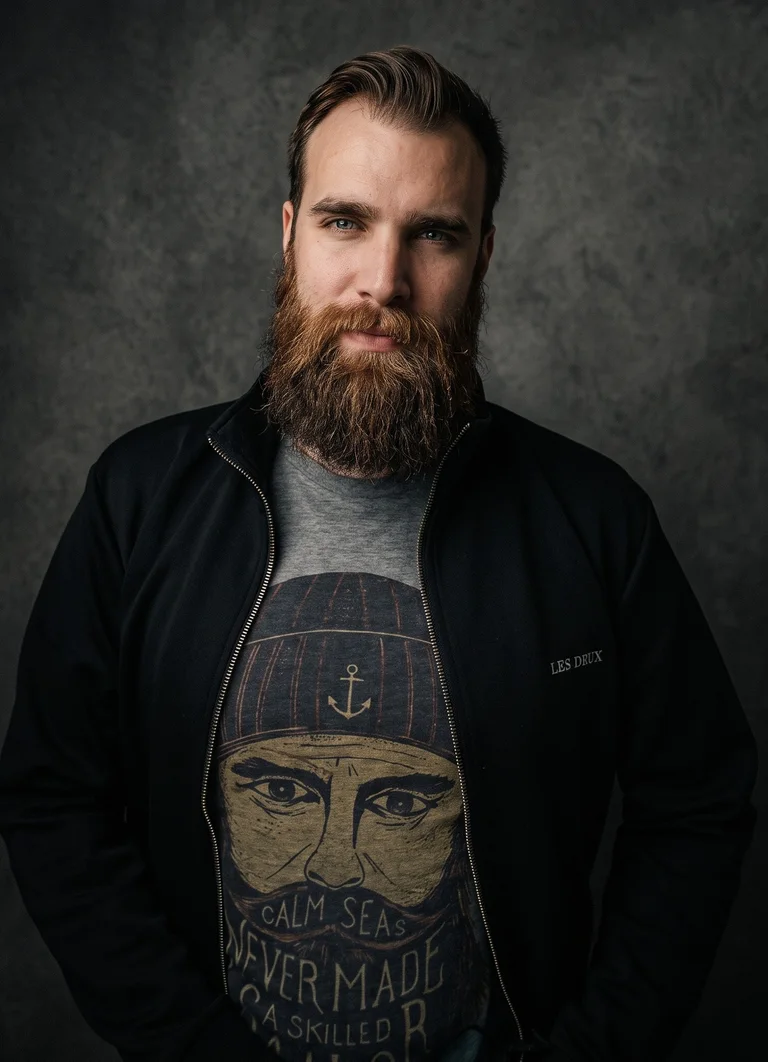
Portrait of Philip Carlsson
Remote · VietnamSwedish citizen working across architecture, technical leadership and delivery.

Architecture, leadership and delivery

The work behind this profile spans implemented systems, measured runs, code and project history. Follow the examples to see how I approach difficult problems and what I can take responsibility for.

Explore my working method, technical range and leadership through the systems, decisions and outcomes that shaped them.

Reading depth: open the supporting sections to explore projects, decisions and practical examples.

Professional profile

The professional in one view.

I work at the point where a difficult operational problem needs one person to hold the system together: the business meaning, the technical design, the delivery path and the operating consequences.

“I make complex reality reconstructable: find the failure beneath the visible symptom, expose the governing rule and turn it into a solution people can inspect and operate.”

Principal-level problem solving

My differentiator is not one language or product. It is getting productive in unfamiliar systems quickly, making the real operational problem explicit and turning uncertainty into a clear design and dependable delivery.

Natural operating position

My work spans principal solutions architecture, technical R&D leadership, technology-function leadership, client solutions and platform ownership. The exact title matters less than the mandate to connect the whole decision.

Foundation

My technical foundation combines live audio, lighting, software and scripting. In concert and broadcasting systems, I used automation, equipment configuration and system integration alongside signal flow, electricity and physical fault diagnosis. Independent web delivery and developer leadership broadened that work into business applications, data, infrastructure and applied AI.

Demonstrated range

The same problem-solving approach holds across unrelated domains: trace the system, understand the constraints and make the result dependable. The project record shows how that translates into systems built, decisions made and outcomes owned.

Explore the project record

My work includes direct engineering, architecture, technical direction and team delivery. The portfolio connects those responsibilities to concrete examples, with working models, code and the decisions behind them.

Career / Earned scope

The same systems instinct, across different worlds.

From live production to independent client delivery and technical leadership, the setting has changed. Understanding the whole system and solving the real problem has remained the thread.

Current chapter · Building a technical R&D function

I joined Fortis in 2021 for a supplementary stable income stream, alongside independent client delivery and programmer leadership. The initial remit was telemarketing and field-service coordination, not the beginning of my technical problem-solving career. I built the overview the process lacked, then separated tools by audience: agent/customer-service capacity and routes, and coordinator-only area history and planning. Their usefulness and longevity exposed a recurring need for dedicated technical work.

I turned that need into Fortis R&D, helped add developers and led the evolution of Insight. The wider business has historically included approximately 50–150 remote agents. That is operational context, not the size of my engineering team.

Today I connect product and domain direction, architecture, developer support, infrastructure and selected external engagements. Major spending remains with company leadership. Technical structure, sequencing, refactoring and quality sit largely with me.

Independent client delivery and programmer leadership

Website work became my main income after becoming location-independent. Growing demand exceeded my own implementation capacity, so I hired programmers and moved into scoping, direction and quality assurance across client deliveries.

Technical production · Mediemerah

A central production and technical role across live broadcasts, events, podcasts and studio recording. Readiness and live fault resolution mattered as much as the output.

Live audio, lighting and integrated show systems

Signal flow, grounding, interference, impedance, DMX, MIDI and console-triggered automation. A practical systems education in environments where failure was immediate and the whole path had to be understood.

01 · How I work

I start with reality, not the tool people happen to know.

A request is often only the visible symptom. I trace data, behaviour, incentives, exceptions and failure modes until the real decision is clear. Then I make the rule inspectable before the implementation hides it.

  1. 01

    Reconstruct

    Learn the work from inside and identify where labels, data and reality disagree.

  2. 02

    Model

    Separate facts, policy, assumptions and exceptions into an explainable decision.

  3. 03

    Prove

    Use examples, counterexamples, code and measurement where prose could create false confidence.

  4. 04

    Build

    Choose a durable platform, adapted reuse or a narrow tool according to lifecycle and risk.

  5. 05

    Transfer

    Leave people with the model, constraints and acceptance evidence they need to own the result.

02 · Distinctive capability

Broad range. One coherent centre.

Across unrelated environments, the recurring pattern is systems reasoning with ownership: understand the dependency model, locate the invariant and turn it into something another person can inspect and operate.

Systems intelligence in uncharted territory

I infer architecture and behaviour from interfaces, outputs and inconsistencies. When documentation or precedent does not exist, I use experiments and first-principles reasoning rather than stopping at the abstraction.

Strategic breadth

I connect business process, application logic, data, infrastructure, security and human workflow into one solution model. A locally sensible decision is not accepted if it makes the system worse somewhere else.

Business-rule design

I turn human judgement into logic that remains fair, testable and explainable when time, ownership, exceptions and imperfect records interact.

Practical invention and responsible reuse

I build what the constraint demands while understanding existing code and dependencies deeply enough to adapt and own them. Reuse is not a black box and novelty is not a virtue by itself.

Model transfer

Walkthroughs, sample data, counterexamples, pseudocode and working proofs carry difficult intent to developers, stakeholders and AI, preserving the context behind each important decision.

Clear technical direction

I explain the mechanism behind consequential decisions and revise the model openly when evidence changes it. That makes the reasoning clear enough for others to use and build on.

More about how I work

Explain the decision

I normally give the causal bridge behind a consequential decision so another person can challenge it, implement it and recognise when the premise has changed.

Adapt as understanding improves

I correct the model openly when new evidence changes it. I keep facts, assumptions and open questions clear so the next decision starts from a sound basis.

Selective depth

Truth, reliability, consequential edge cases and visible craft deserve deep attention. Low-risk cleanup can wait when the operational need is more urgent.

Ownership without isolation

I use developers, AI and existing work readily, but only where the result can be understood, verified and responsibly owned.

Fairness as correctness

A rule can be mechanically consistent and still be operationally false. I test policy against attribution, control and real human consequence.

Outcome before syntax

Current tool knowledge determines where investigation begins, not the limit of the result I will accept.

03 · Professional range

I can stay with the problem as it crosses boundaries.

The continuity from discovery to operation prevents important meaning being lost at each handoff. Specialists are brought in where depth or capacity requires them, but the overall decision remains coherent.

DiscoverOperations and business reality

Process, incentives, failure modes and the actual need beneath the request.

ModelArchitecture and policy

Data meaning, decisions, interfaces, security and system boundaries.

BuildDirect engineering

.NET, Blazor, PowerShell, JavaScript, APIs, SQL, web systems and applied AI.

LeadPeople and delivery

Developer direction, specialist coordination, acceptance evidence and governance.

OperateReliability and improvement

Observability, recovery, performance, maintainability and iterative refinement.

Client solutions and commercial delivery

From opportunity discovery and feasibility through scope, assumptions, specialist procurement, delivery governance and sustainable service models.

Automation, integration and data

Documented and undocumented APIs, browser-compatible flows, acquisition, normalization, enrichment and operational analytics.

Platforms and infrastructure

Self-managed Kubernetes, CI/CD, persistent storage, monitoring, controlled ingress, backup paths and pragmatic operational security.

04 · Leadership

I lead from inside the problem.

Across live production, independent client delivery and technical R&D, I have repeatedly made overlooked problems solvable. The same systems approach connects architecture, product direction, developer leadership, platform responsibility and client delivery.

My role is to make the difficult parts clear enough that people can build around them. Routine implementation can be delegated. High-consequence intent is transferred through shared reasoning and executable evidence.

Operational immersion

Understand the work from inside.

Working solution

Remove immediate friction with something real.

Reusable model

Expose the shared need and governing rule.

Technical function

Provide people, process, direction and accountable delivery.

Technical leadership and architecture

Business and technical discovery, solution and workflow architecture, feasibility and dependency analysis, technical direction, implementation planning, prioritisation and quality assurance.

Automation, integration and data

Documented and undocumented integrations, automation, acquisition and enrichment, operational analytics, business-rule design and controlled AI-assisted processing.

Client solutions and delivery

Opportunity discovery, solution shaping, proposals, scope and assumptions, specialist procurement, delivery governance, contract boundaries and ongoing-service design.

Platforms and infrastructure

Self-managed application platforms, CI/CD, persistent storage, monitoring, controlled ingress, recovery paths, operational security and practical administration.

Open the practical technology range

I am hands-on with C#, .NET and Blazor architecture, implementation, debugging and review; PowerShell; JavaScript, HTML/CSS, PHP and Apps Script; SQL Server, PostgreSQL, SQLite and MySQL variants; Linux, Bash, Python and Groovy as required. Earlier work includes C/C++ and embedded control systems.

I choose the appropriate level of engineering: a careful narrow tool when it is truly enough, adapted reuse when the foundation is sound, or a durable application and operating platform where people will depend on it.

05 · Communication

Reasoning in motion, then clear direction.

My communication style is practical. A working discussion tests the model using real examples. Once the decision is understood, direction becomes direct, traceable and usable by the person taking the next step.

How the conversation develops

I use concrete cases to expose a false premise, test a rule and revise openly. The goal is a shared model that leads to clear decisions.

One core style, different registers

Technical peers receive mechanism. Leaders receive consequence, governance and decision framing. Operations receives sequence and ownership. The facts stay consistent.

Communication that carries the work

Direction normally includes the causal bridge needed to survive handoff. I advocate from contribution and consequence, and own correction when better evidence is available.

06 · In practice

The useful result is rarely just the code.

My contribution is usually the combination of investigation, a better model, direct engineering and a path other people can operate. These are recurring forms that work takes.

Temporal and fairness-sensitive decisions

I model histories, ownership, time zones, tolerances and exceptions explicitly so outcomes remain fair and auditable when the source data changes.

Integrations without a clean integration point

I reconstruct authentication and protocol behaviour, preserve durable state and add idempotency, recovery and audit evidence around brittle external systems.

High-volume operational pipelines

I shape concurrency around network, memory, database and stage limits. Throughput matters, but so do backpressure, cleanup, observability and restart behaviour.

Platforms built around the business

I separate provider schemas from business-owned concepts so a working first system can evolve into a durable multi-source architecture without discarding what it taught us.

Technical client solutions

I can take an opportunity through discovery, feasibility, scope, assumptions, specialist procurement, contract boundaries, delivery governance and ongoing service.

AI-native engineering. Experienced judgement.

AI is part of my everyday engineering workflow, from investigation and design to implementation, testing and review. Problem definition, constraints, acceptance, integration and production consequences remain mine, and generated work is tested according to risk. In the 2026 analytics work, this means explaining the operational reason for a rule, using real timelines to challenge the model, and keeping attribution, permissions and review decisions explicit. The leverage comes from turning a clear operational model into a dependable product without losing the intent along the way.

07 · What stands out

One systems approach. A wide practical range.

The strongest signal is the repeated ability to enter an unfamiliar system, find the decision that actually governs it and stay accountable as the answer crosses technical and organisational boundaries.

Range with depth where it matters

I move between software, data, infrastructure, operations, physical systems and commercial delivery, connecting the specialist knowledge each problem needs. I go deep personally where the governing risk demands it.

Judgement before machinery

I choose between a narrow tool, adapted reuse, direct engineering and a durable platform according to consequence and lifecycle—not according to which technology is fashionable.

Clarity that survives handoff

Examples, counterexamples, measured runs, code, decision records and visible boundaries make the result challengeable. Another person can see why it works and where it stops.

Value beyond the assigned role

The record includes creating a technical function from demonstrated need, providing platform capability, supporting operational recovery and carrying product and client responsibility beyond a narrow engineering assignment.

Directness without theatre

I explain what I believe, why I believe it and what would change the conclusion. That keeps the reasoning explicit and the decision clear enough to improve.

Ownership to the operational edge

I do not consider a design finished at the diagram. Deployment, authentication, failure handling, monitoring, recovery, user behaviour and maintainability are part of the same system.

08 · Maker mindset

Understand it. Make it work. Make it last.

My technical foundation spans physical systems and code. Software and scripting were part of concert and broadcasting work: automating tasks, connecting systems and configuring hardware, alongside signal flow, electricity and fault diagnosis.

I still repair objects, design and print functional parts, modify electronics and improve machines for safety, capability and longevity. Across hardware and software, the instinct is the same: understand what is actually happening, respect the constraints, expose the failure and leave the system more useful and maintainable than I found it.

Why this matters professionally

It makes abstraction a choice rather than a hiding place. I am comfortable tracing a behaviour through physical constraints, user workflow, data, infrastructure and code until the real boundary is visible.

That is why the same approach appears in fault diagnosis, offline policies, business-rule engines, integrations and operational platforms. The material changes; the habit of making a system understandable does not.

History / Live production

Systems that had to work. Live.

Sound engineering, events and live broadcasting brought hardware, software and people into one working system. Automation, configuration and signal flow all served the same requirement: the production had to work when it went live.

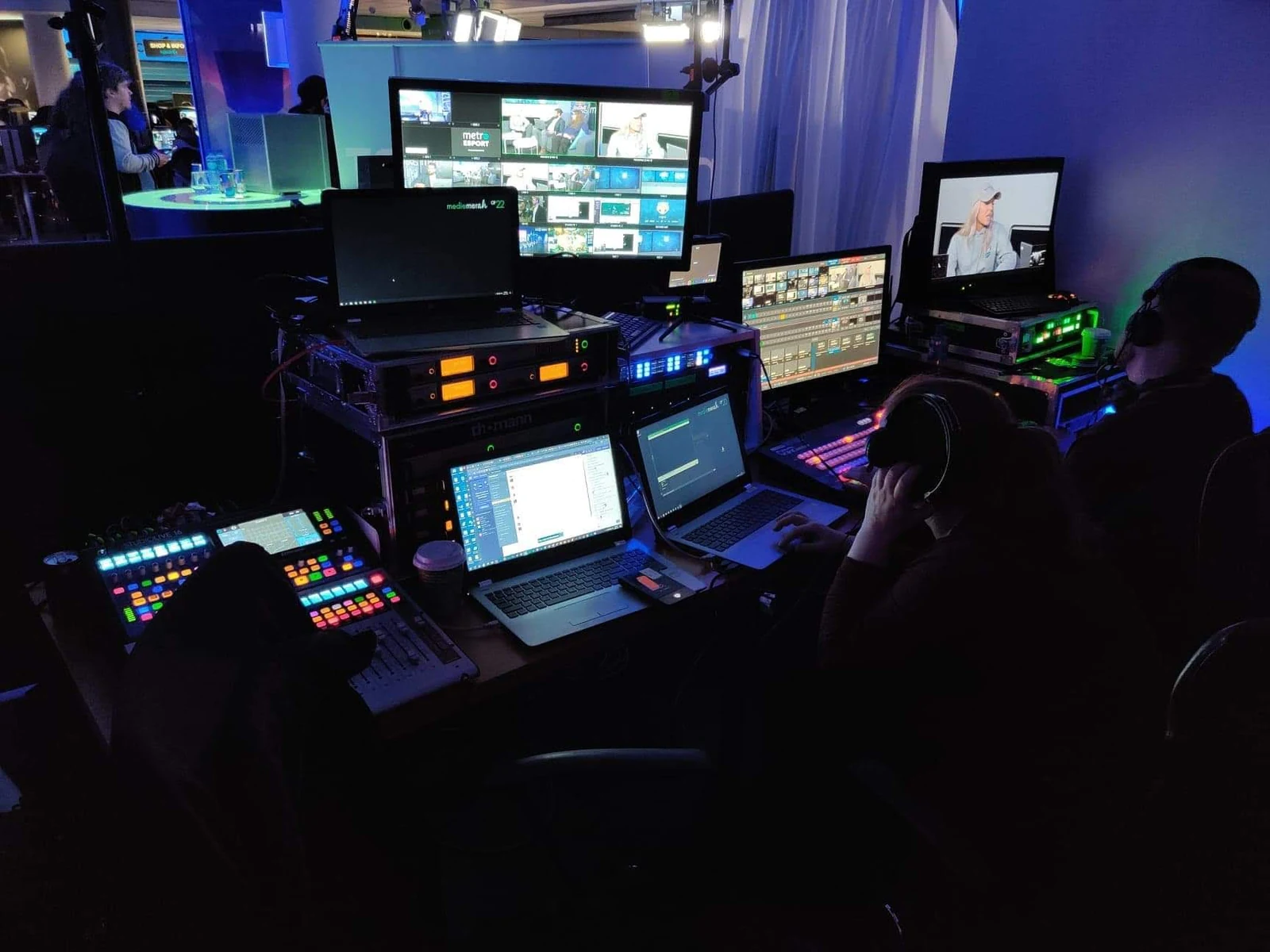
A live-broadcast control setup from my work with Mediemerah, with switching, audio, monitoring and rack equipment.
Live broadcasting · Mediemerah

Production was a system,
not a single console.

Picture, sound, switching and monitoring had to work as one signal chain. With a broadcast live, a fault was not a ticket for later. I built and worked behind these systems with my coworkers, where readiness and fault diagnosis were part of the job.

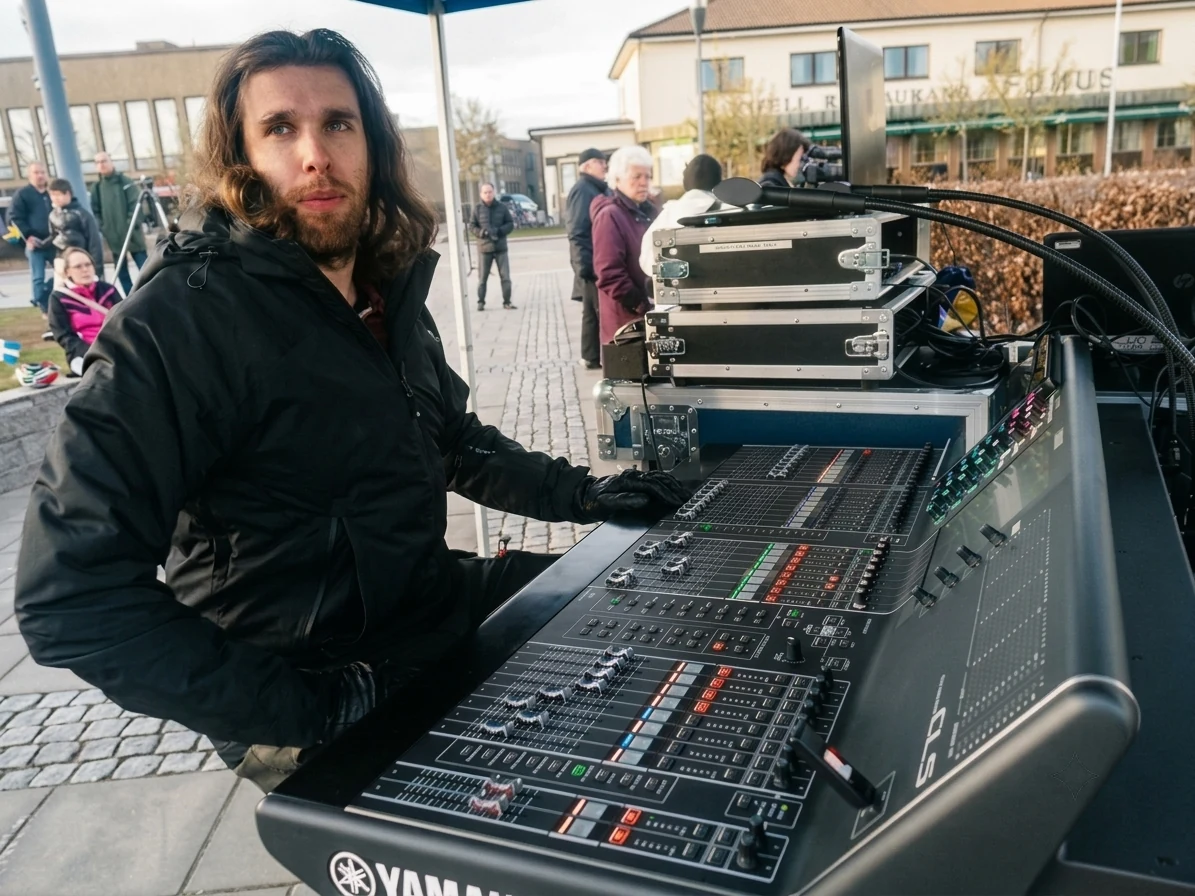
Philip at an outdoor sound-production setup.
At the controls. Live sound meant understanding the complete path, from the source to what the audience actually heard.
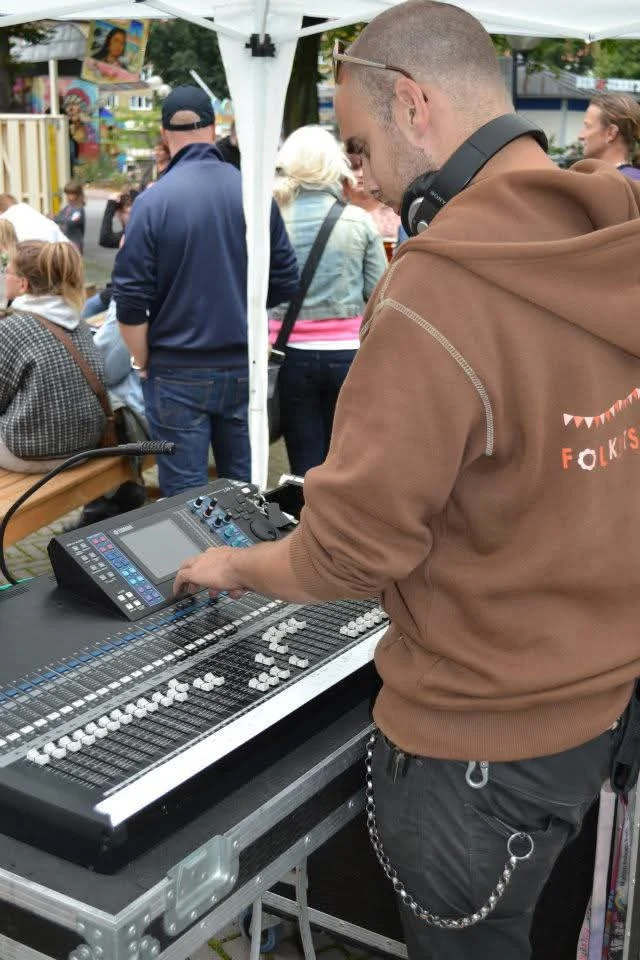
Philip working directly at a digital mixing console during an outdoor event.
Hands on, when it matters. Sound engineering and technical production, from an earlier chapter of my working life.
05 / SHOWCASES

Engineering that makes the reasoning visible

Making the reasoning visibleIllustrative model / no operational data
Raw evidence supports an interpreted interval, which can be opened to inspect the rule and supporting activity.
The interface is part of the reasoning. Observation and interpretation must remain distinguishable. In Insight, the same principle runs from an overview to the source evidence behind a selected result. View real screens in the protected showcase →
Flagship · Production integration

A recruitment pipeline where no viable integration existed

The challenge was not one API call. It was reproducing browser-oriented authentication, retaining durable state and safely coordinating several systems with different concepts of a candidate.

  • OTP and TOTP authentication with cookie lifecycle management
  • Token-expiry inspection before requests fail
  • Undocumented GraphQL ingestion and pagination
  • Idempotent SQLite persistence and schema migrations
  • Dry runs, action policies, outcome reconciliation and audit logs
Demonstrates reverse engineering + production automation
Flagship · Concurrent data engineering

A six-stage PowerShell dataflow runtime

The population-data system grew from early parallel experiments into a long-running processing runtime that feeds completed work through dependent national-data stages without imposing full-batch barriers.

  • Reusable runspace pool, completion-driven scheduling and practical backpressure
  • Different stage capacities plus runtime adjustment from measured latency
  • Explicit session, runspace and COM-object lifetime management
  • Live throughput, memory, queue, byte and proxy-cost telemetry
  • 502,253 distinct IDs completed on 23 June 2024: a 24-hour average of 20,927/hour, not a general throughput guarantee
Demonstrates systems programming + measurement-led optimization + workflow architecture
Operational intelligence

Matching imperfect people and property data by confidence

The Hanna invoicing workflow automated daily enrichment of customer invoices with property identifiers and personal identity data—a task considered impractical to perform manually at operational volume. It handles messy input through progressively broader identity searches, accepts only unique results, records match strength and uses coordinate perturbation when map points fall near property boundaries.

  • Ordered matching strategies from exact to deliberately broad
  • Ambiguity protection rather than taking the first result
  • Coordinate rounding and offsets with confidence labels
  • Parallel processing, structured logs and packaged dependencies
  • Converted a slow row-by-row lookup into a dependable operational process
Demonstrates pragmatic algorithms + defensive design + operational leverage
Applied AI · Data product

AI as one controlled stage in a larger system

The Amazon and Eva projects show AI used as an engineering component: inputs are prepared, outputs constrained, costs measured, results normalized and the final data made useful to an operational workflow.

  • Structured schemas rather than free-form answers
  • Batching, resumability, token accounting and cost tracking
  • Taxonomy design and fuzzy category consolidation
  • Audio retrieval, transcription and role-aware call analysis
Demonstrates applied AI + data-product thinking
Google Apps Script + Sheets · Formula-language applications

Pushing spreadsheets into a field-operations platform

I designed and built the complete spreadsheet layer. Provider A-connect feeds complementary audience-specific surfaces, while formula-driven time grids, data movement, policy logic and exception states behave like application code inside a far less forgiving language.

  • Rolling 28-day and 20-workday interfaces advance automatically from today
  • 1,544 Schema formulas have a measured median exported length of 653 characters and seven nesting levels
  • Bokningar contains 2,701 inspectable formula placements and reaches ten nesting levels
  • 290-municipality coordinator matrix with recency, readiness and 1,740 drive-time positions
  • Route planner replaced roughly 70+ manual map checks in a typical ten-technician day
  • Managerial planning deliberately separated from agent/customer-service information
Demonstrates constrained-environment programming + operational modeling
Google Apps Script · Full-stack business app

A governed customer-export product for real-estate offices

The real-estate exporter turns several CRM endpoints into a user-facing qualification workflow. It gathers viewing participants, excludes unsuitable contacts through parallel checks and produces ready-to-use exports.

  • Email-based access control and persisted user preferences
  • Office batching and paginated API ingestion
  • Five concurrent checks per contact with timeout/retry control
  • Throttled processing, cancellation and live progress
  • Audit statuses plus client-side CSV and XLSX generation
Demonstrates full-stack workflow + product thinking
06 / PORTFOLIO

Representative systems and outcomes

The flagship examples above explain the pattern. This ledger preserves additional breadth; the engineering portfolio contains the deeper technical cases.
Open the full systems and outcomes ledger
Recruitment automation

job board · applicant tracker · telephony platform

Independently created a multi-system recruitment pipeline processing about 60 daily applications. Replaced an expanding manual backlog and reduced lost or delayed candidates by an estimated 60–75%. Includes browser-compatible authentication, OTP/TOTP, GraphQL ingestion, durable state, idempotent synchronization, outcome reconciliation and operational logging.

External engagement ownership

IMAP global website platform

Brought a client opportunity through solution shaping, alternative commercial models and a signed fixed-fee engagement. Scoped a 16–22 week Pimcore-to-WordPress transformation spanning discovery, UX/UI, multilingual governance, approximately 40 pages, 35 GB of assets, integrations, migration, SEO transition, QA, training, launch and warranty. Drafted the client agreement and risk controls, recruited and contracted specialist implementation capacity, aligned subcontractor milestones with delivery, and designed post-launch support plans for continued revenue.

Business platform · Three generations

Fortis Insight

I lead the design and evolution of an internal platform spanning sales performance, KPI analysis, work logging, CRM workflows, protocols, reporting and external-system integrations. It progressed from spreadsheet-proven rules through React and Blazor generations into Insight Web’s business-owned canonical model, normalizing projects, interactions, sales processes and bookings across three providers. I defined the domain logic, architecture and product direction, worked with developers on application delivery and directly implemented selected high-complexity features: authentication and container integration, offline service workers, reporting and the 2026 temporal qualification engine. The latest work connects manager and agent analytics with inspectable qualification rules, review workflows, source/custom/paid-time totals, own-activity permissions and historically fair booking/order attribution. Real timelines and operational counterexamples guide the design and acceptance decisions.

Temporal business algorithm

Sales-performance booking intelligence

Conceived the algorithm that turns mutable booking records into fair, historically accurate performance events. It reconstructs each customer’s chronology, divides activity into project-configurable commercial cycles, prevents repeated records from inflating results, preserves original booking credit, dates later cancellations and deletions as separate debits, restores fully soft-deleted histories, and attributes resulting orders to the original booking owner. I derived the rules from deep knowledge of what the available data represents and how it is used or misused, verified the edge cases, then conveyed the solution through meetings, functional snippets, clean sample datasets and pseudocode for reliable .NET implementation.

Data engineering

Population and prospect intelligence

Designed a six-stage acquisition and enrichment runtime for Swedish person, geographic, property, vehicle, pet, employment and company information. Live MSSQL evidence contains 7,947,815 people; 502,253 distinct IDs were completed on 23 June 2024, a historical 24-hour average above 20,000/hour, not a general throughput promise.

Operational data engineering

Retention, prospect and geocoding lineage

Consolidated fragmented histories for roughly 45,000 customers, restoring operational visibility and supporting renewed active handling; about 13,000 were ultimately classified as expired or lost. Related PowerShell systems normalized purchased lists, enriched people, properties and companies across several sources, applied geographic/recency/ownership/phone rules and delivered processed records into signed Provider A calling workflows.

Applied AI

Call intelligence

Built a pipeline to retrieve recordings, transcribe calls and return structured metrics for customer profiling, agent coaching and performance analysis across telemarketing systems.

High-volume R&D

Amazon vendor intelligence

Directed the architecture and optimization of a large catalogue-acquisition system, mentoring a developer in concurrency, resource limits, network resilience, database performance and retry design; then created AI-assisted vendor classification and commercial sizing workflows.

Direct implementation · Temporal policy engine

Fair work-time qualification

I replaced rigid clock-hour validation with a C#/.NET engine that interprets a full day as timezone-safe activity intervals. It finds call-density-supported spans, clusters continuous activity, earns capped gap recovery from productive work, identifies eligible lunch, combines different project thresholds proportionally, and emits an explainable timeline of qualified, missing, lunch and tolerated time. I stepped into direct implementation when the policy's interacting rules were losing fidelity through normal handoff layers. The development sequence shows my working method: build the complete model, tighten it against real boundary cases such as lunch treatment and zero-duration calls, then make remaining judgement visible through validation, warnings and controlled review rather than burying it in hidden rules.

Foundation engineering

Offline application boilerplate

Created a .NET/Blazor foundation with a carefully designed service-worker approach enabling offline behaviour for defined request classes and cached resources—solving a repeated weakness across previous WASM projects.

Scheduling analytics

Akono operating intelligence

Turned CRM bookings, dialer history, customer geography, open slots and map data into audience-specific field decisions. Akono Helper serves agents and customer service with capacity and route validation; the separate coordinator workbook supports area recency, readiness and geographic sequencing. Both survived far beyond their intended prototype life and helped establish the case for R&D and Insight.

Full-stack Apps Script

real-estate customer exporter

Built an access-controlled browser application for selecting offices and date ranges, retrieving paginated CRM participants, concurrently checking booking/buyer/seller/contact/property conditions, tracking progress and query outcomes, persisting preferences and generating CSV or XLSX exports.

Status matters: the commercial case establishes a signed and scoped engagement, not completed launch. Platform recovery architecture is not the same as a tested restore. Estimated reductions remain estimates.

11 · Roles and responsibilities

Principal-level capability with functional-head scope.

The strongest fit is a role where ambiguity is part of the job and technical decisions must survive contact with operations, clients and commercial reality.

Explore the role scope

Principal and solutions leadership

Principal solutions architect, technical R&D lead or technical client-solutions lead describe the work I do best. They reflect difficult solution design, business-rule authorship, developer leverage, infrastructure ownership, operational accountability and commercial solution formation.

Functional-head fit

Head of R&D or technology fits where the mandate is hands-on and the organisation needs one accountable technical centre across architecture, platforms, delivery quality and product direction.

Hands-on technical leadership

My experience centres on small and mid-sized organisations where architecture, product direction, platforms and delivery need one accountable technical lead. I work close to the systems and the decisions, combining principal-level engineering with functional ownership.

12 · Explore my work

See the decisions behind the delivery.

Explore the portfolio for the engineering, working models and operational decisions behind these capabilities. Each case connects the problem to the approach, my role and the result.

Share this page